The MISS.A 2 order
🔣 Glyphs: the symbols that make up a writing system.
📜 Abecedary: an (ancient) inscription representing a short inventory of glyphs, such as an alphabet.
The results of Ordered Set Correspondence (2026) draw attention to a specific ancient abecedary known as MISS.A 2. Never heard of it? That's OK, we'll take this slowly. Note that our starting point for what we are doing isn't the appearance of the abecedary, but its order, first and foremost. In a nutshell, the MISS.A 2 order (T, TH, Y, A, ...) looks completely different from our canonical "ABCD". MISS.A 2's order, however, is permutationally close to the letter frequencies of certain ancient languages: Phoenician, Amorite, Hurrian, etc. If this correspondence is not coincidental, it could be evidence that it was first designed from the letter frequencies of one or more given languages. It may also provide clues about the date or cultural context in which it was created.
Beyond alphabetical order, we can then also take into account the letter shapes of the MISS.A 2 abecedary. MISS.A 2 is actually made up of about seven groups of letters. Each group contains several letters that resemble each other. We won't go into too much detail here, but the MISS.A 2 inscription and its characters are visible in this publication on page 441. You can also view its page on OCIANA, which includes a photograph.
📊 The MISS.A 2 table
The table below puts the MISS.A 2 groups alongside several ancient and modern writing systems. The aim isn't necessarily to claim that these scripts descend directly from MISS.A 2, but to make similarities and differences in ordering, grouping, and glyph design easier to inspect. Knowledge of the different scripts isn't entirely necessary; what is interesting is how the ordering may place letters with similar shapes in similar categories. The table is quite large, so feel free to skim-read it at first.
| Source / Script | Group 1 | Group 2 | Group 3 | Group 4 | Group 5 | Group 6 | Group 7 | Group 8 |
|---|---|---|---|---|---|---|---|---|
| MISS.A 2 | 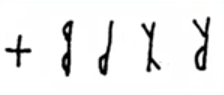 | 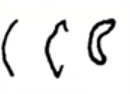 | 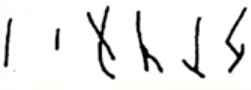 |  | 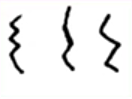 |  | 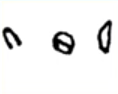 | 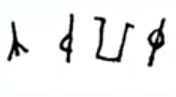 |
| MISS.A 2 | t ṯ y ʾ ṣ | b r m | l n ḫ h z k | ḥ s¹ | s² ġ f | ḍ ṭ | ʿ w g | ḏ d ẓ q |
| MISS.A 2 character complexity | High | Low | Low | Low | Mid | High | Mid | High |
| WH 3598 in columns of 10 | {f} ʾ s² t ṣ | r {b} m | l z {ẓ} k ḫ | s¹ | ṯ d g y | q ṭ ḍ ḏ | w ġ | h ʿ n ḥ |
| Amorite character frequency (GELB) | r n ʾ b m | l k d t ś | y z | ḫ š p | q | g w ʿ | ḥ ṭ ṣ s ḏ h ẓ | |
| Ugaritic graphically | 𐎚 𐎘 𐎀 𐎔 𐎕 | 𐎙 𐎎 𐎁 | 𐎂 𐎇 𐎃 𐎐 𐎅 𐎛 𐎍 𐎜 | 𐎒 | 𐎌 𐎓 𐎏 | 𐎖 𐎑 𐎉 𐎈 | 𐎋 𐎆 𐎗 | 𐎄 𐎊 𐎝 |
| Above transliterated | t ṯ ʾ p ṣ | ġ m b | g z ḫ n h ʾi l ʾu | s | š ʿ ḏ | q ẓ ṭ ḥ | k w r | d y s2 |
| Wedge count | 1 2 2 2 2 | 2 2 4 | 1 2 3 3 3 4 3 4 | 3 | 3 1 2 | 2 3 3 4 | 3 4 5 | 6 6 7 |
| Libyco-Berber (Dougga) | 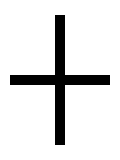   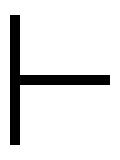 |  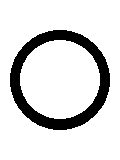 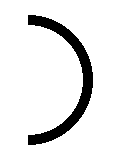 | 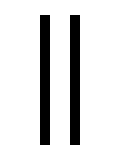 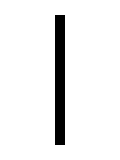   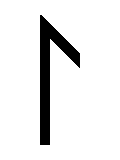 | 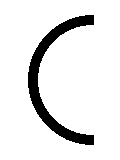  | 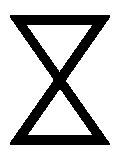 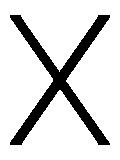 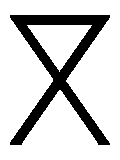 | 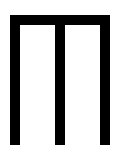 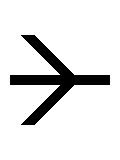 | 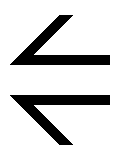  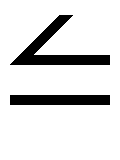 | 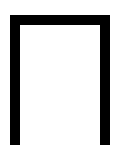  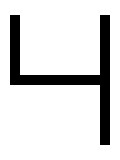  |
| Dougga transliteration | t¹ z² y ṣ | b r m | l n h z¹ g | s² sh | s¹ t² p | z³ ṭ | k¹ w k² | d ġ ? t³ |
| Old South Arabian (OSA) | 𐩼 𐩮 𐩺 𐩻 𐩩 | 𐩣 𐩧 𐩨 | 𐩸 𐩬 𐩫 𐩶 𐩡 𐩴 | 𐩪 𐩢 | 𐩵 𐩰 𐩯 𐩦 | 𐩤 𐩹 𐩳 𐩷 | 𐩥 𐩲 | 𐩭 𐩱 𐩠 |
| OSA transliteration | t ṯ y ṣ ẓ | b r m | g l ġ k n z | ḥ s | š s3 f d | ṭ ḍ ḏ q | ʿ w | h ʾ ḫ |
| Arabic | تثي ض ص ء | منب | جخهل | سح | قفغعش | ذدظط | رو | ك ا ز |
| Arabic transliteration | a ṣ ḍ y ṯ t | b n m | l h ḫ g | ḥ s | š ʿ ġ f q | ṭ ẓ d ḏ | w r | z ʾ k |
| Hebrew | א | ע ם ב | י ן ז ל ג | ש | ץ ק ף | ס ט | ך ו ד ר | ח ה ת |
| Hebrew transliteration | a | b m ʿ | g l z n y | š | p q ṣ | ṭ s | r k w d | h t ḥ |
| Nabataean | 𐢀 | 𐢒 𐢂 𐢗 | 𐢉 𐢏 𐢐 𐢄 𐢌 | 𐢝 | 𐢙 𐢚 𐢘 | 𐢖 𐢋 | 𐢔 𐢈 𐢅 𐢛 | 𐢊 𐢞 𐢇 |
| Nabataean transliteration | a | b m ʿ | y g l n z | š | p q ṣ | ṭ s | r k w d | h t ḥ |
| Phoenician | 𐤌𐤑 | 𐤏 | 𐤋 𐤂 𐤆 𐤍 | 𐤔𐤉 | 𐤒 𐤐 | 𐤕𐤈 | 𐤃 𐤊 𐤅 𐤁 𐤓 | 𐤎𐤇 𐤄 𐤀 |
| Phoenician transliteration | ṣ m | ʿ | g l n z | y š | p q | ṭ t | r b w k d | a h ḥ s |
💡 Open questions
Using the table of characters above, we can then ask ourselves a few questions about how the MISS.A 2 order, on the one hand, and its letter groups and shapes, on the other, relate to other ancient and present-day alphabetical orders, writing systems, and languages.
Order and frequency
- Why is the HLḤM order not flagged as permutationally close to the MISS.A 2 order in our study?
- Is the ancient abecedary WH 3598 just another MISS.A 2 order, but read in columns rather than rows? Were the last four letters originally
h ʿ ẓ ḥie. the sounds not rendered in Akkadian cuneiform? - Was the first letter group of the MISS.A 2 order a later addition to the other letter groups?
- When considering MISS.A 2, does letter group ordering matter more than letter order within each group does?
Glyph shape and visual structure
- Does MISS.A 2 help explain the choice of letter designs in the oldest known large-scale use of the alphabet: Ugaritic?
- Are Arabic letters and their dotting influenced by the MISS.A 2 order as much as they are by the Nabataean script? What roles did scripts related to Safaitic, as well as the Nabataean script, play in the formation of the Arabic alphabet?
- How do Aramaean scripts such as Palmyrene, Nabataean, and Hebrew square script relate to MISS.A 2?
- Did the MISS.A 2 order have intrinsic limitations on its learnability because nearby letters looked very similar?
- Does MISS.A 2 help link Libyco-Berber writing with other writing systems?
Writing-system relationships and historical origins
- Do all letter shapes, old and new, really come only from Phoenician or so-called Proto-Sinaitic?
- Why is it harder to group Phoenician alphabet letters in a MISS.A 2 way compared to most ancient alphabets?
- Does the traditional Egypt/Proto-Sinaitic account fully explain the development of the alphabet, or might the history be more complicated than the alphabetical and phonological models traditionally used to describe it?
- Can letter shapes really be explained simply by assigning them a single, hard source of origin, or are multiple sources possible? Did we get some things wrong?
Language and phonology
- Does the MISS.A 2 order originally come from languages written in cuneiform, such as Amorite?
- Can MISS.A 2 provide additional constraints on reconstructing the phonology of ancient languages?
Cultural assumptions
- Is an alphabetical order only canonical because it survives to the present day, or was MISS.A 2 also a canonical order?
- Are all ancient alphabets to be considered ordered in the "ABCD" order when we have no direct evidence of this, simply because they shared some visual appearance with our own alphabet?
- To what extent have modern assumptions about the literacy, mobility, prestige, and social organization of Safaitic — and Amorite — speaking communities influenced how we interpret their writing systems?
🗝️ Conclusion
We hope you find the patterns uncovered and questions raised here interesting. Some of them will become particularly relevant to the next topic we will explore: the decipherment of the Byblos Syllabary.